SpectraLight
Chromatic Dispersion Lights
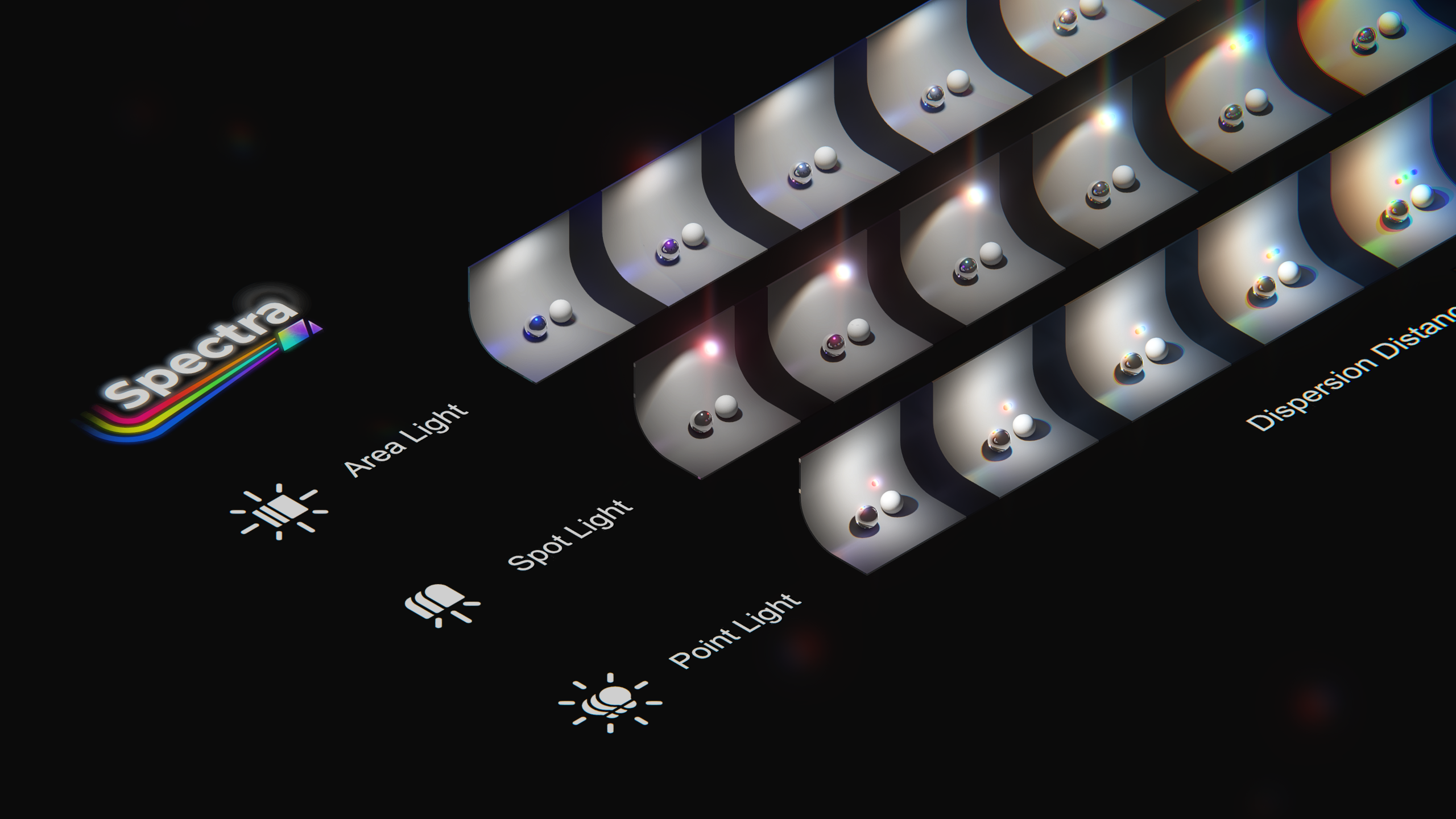
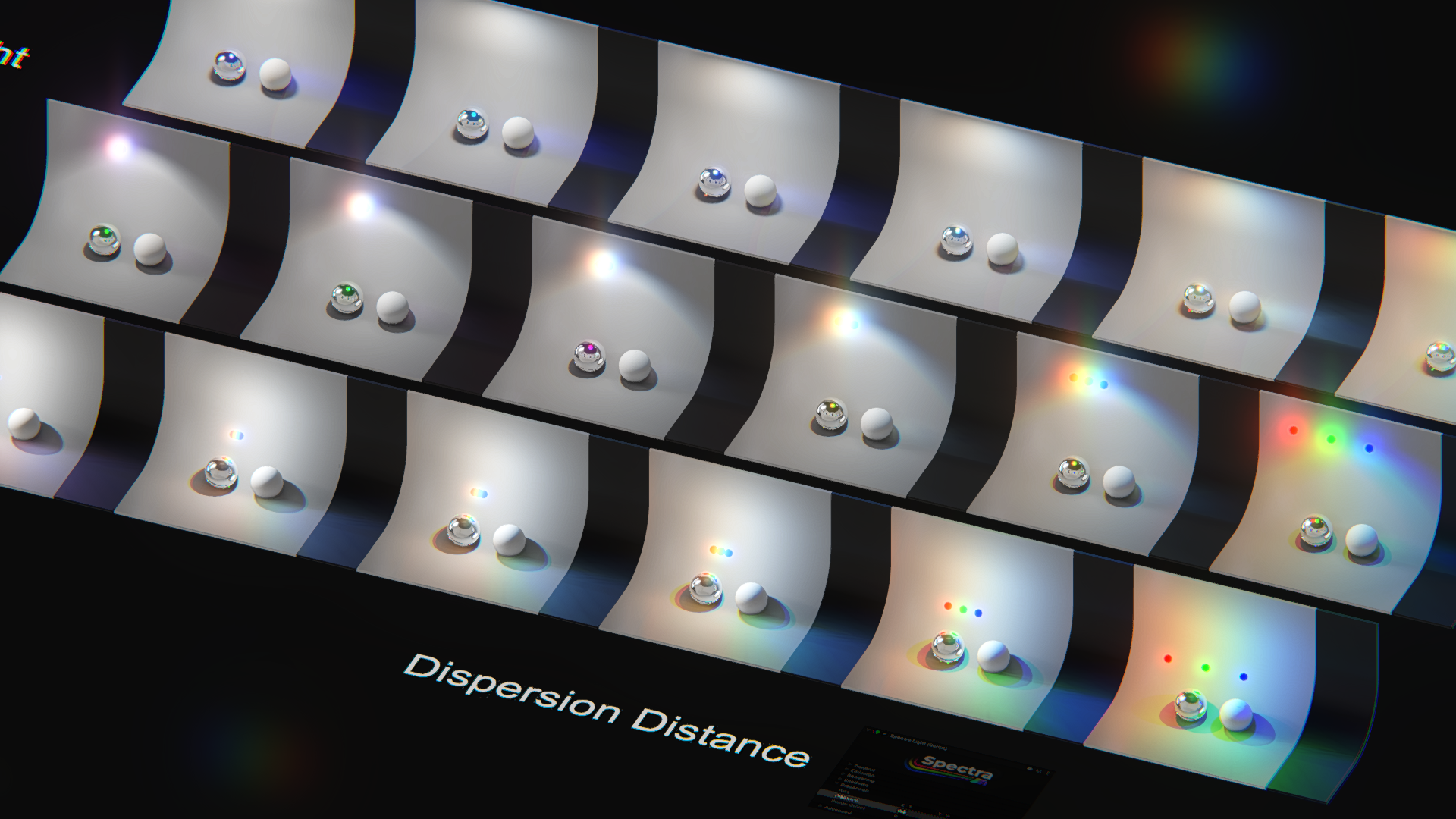
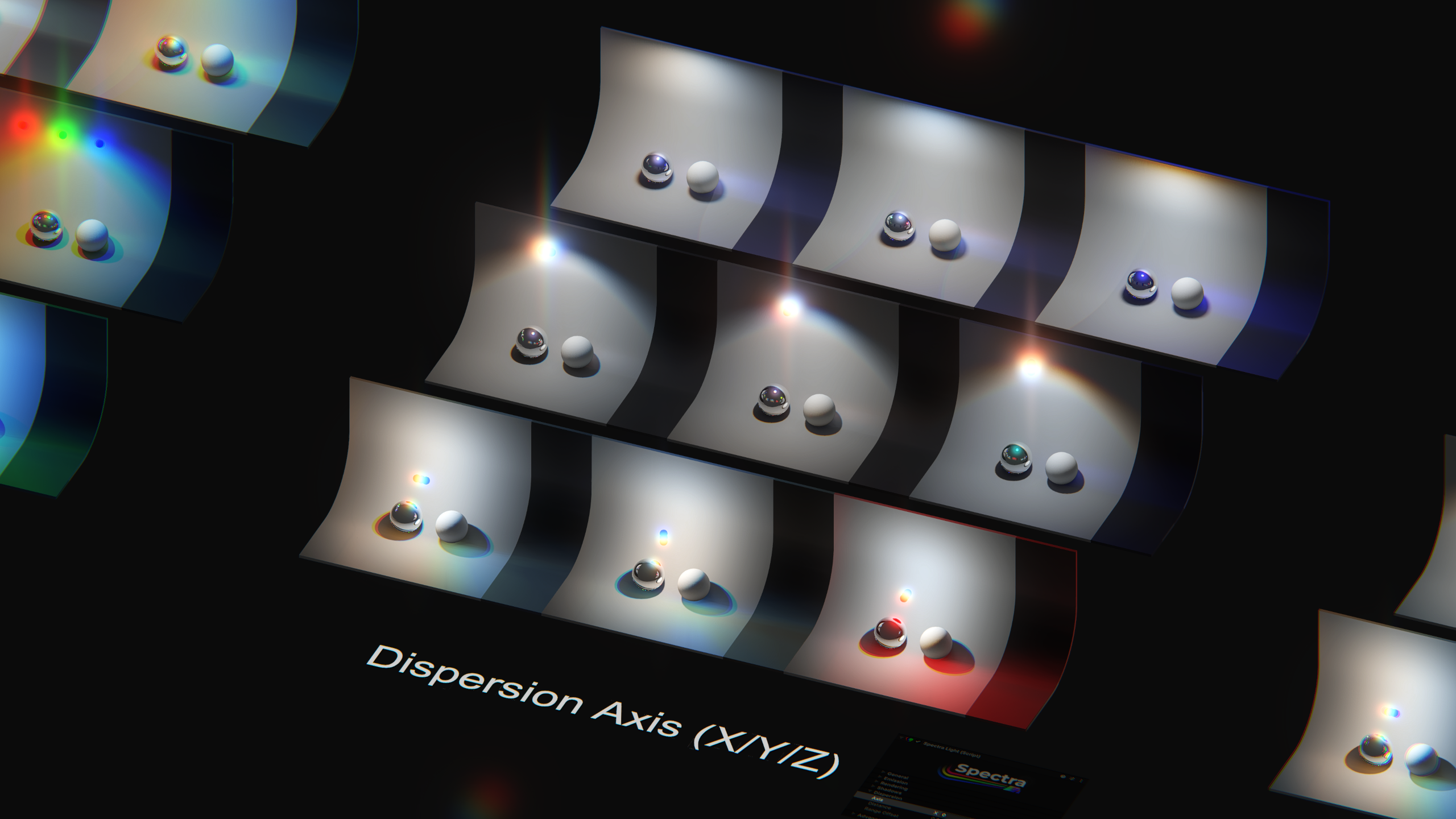
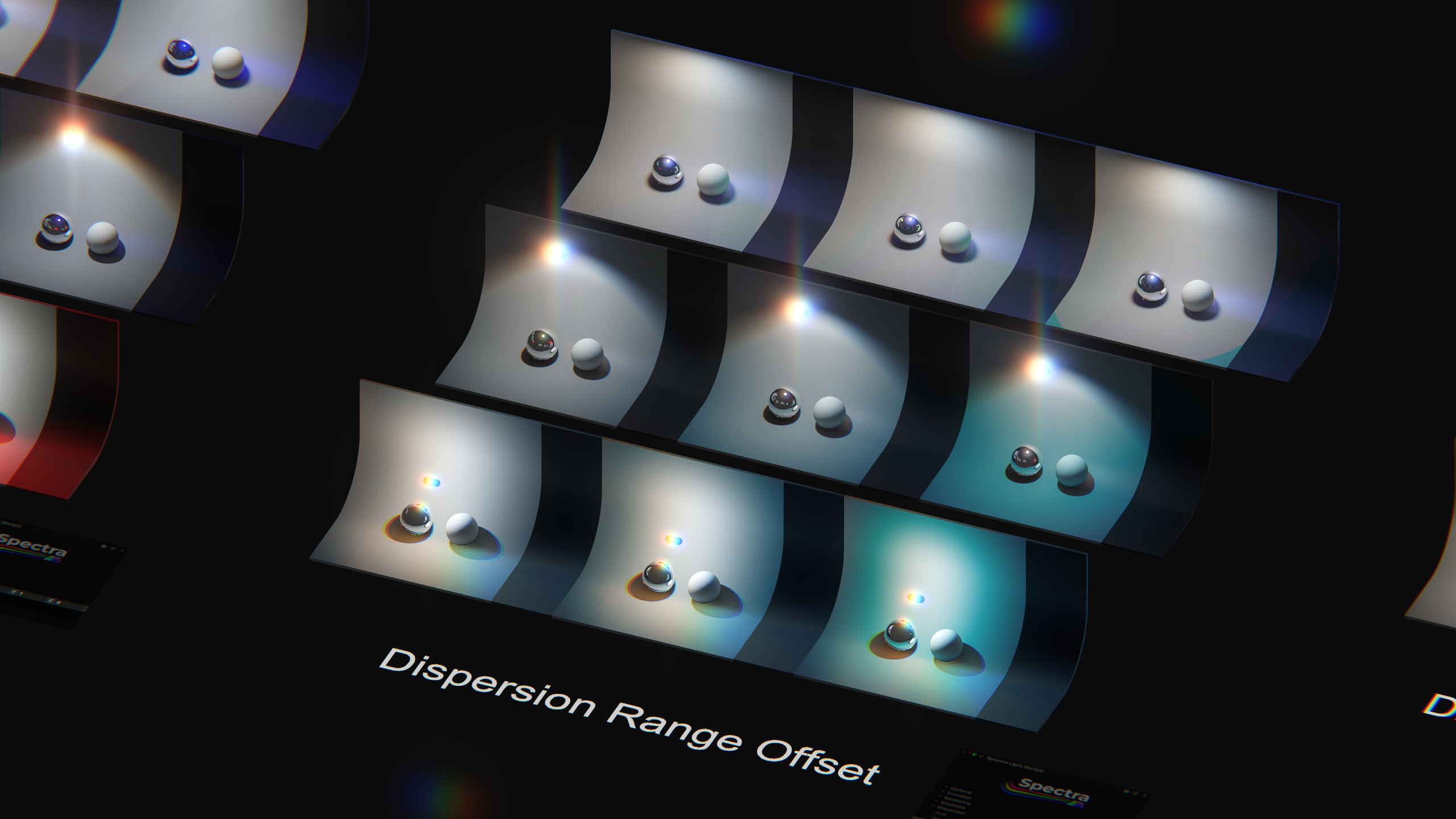
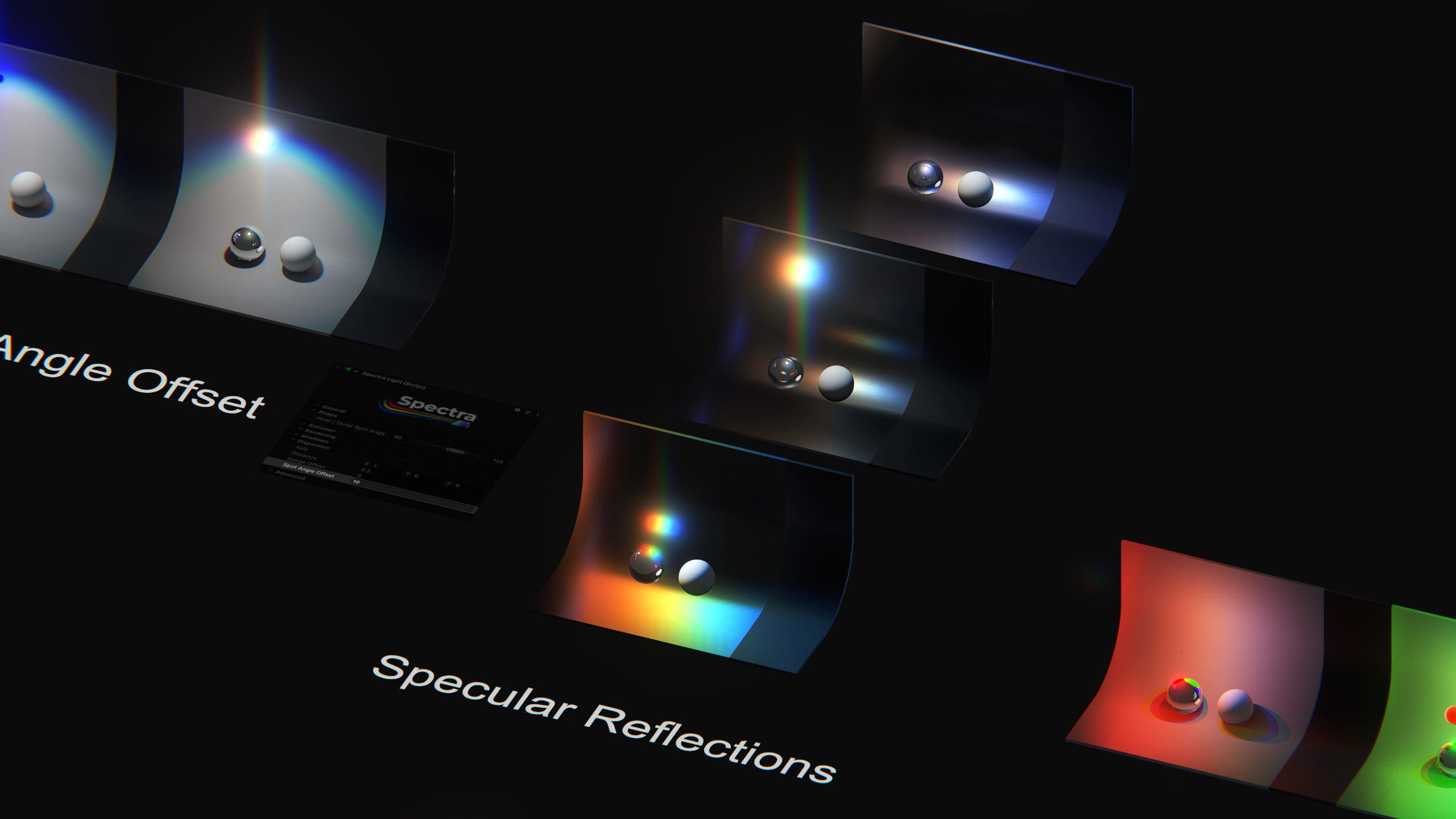
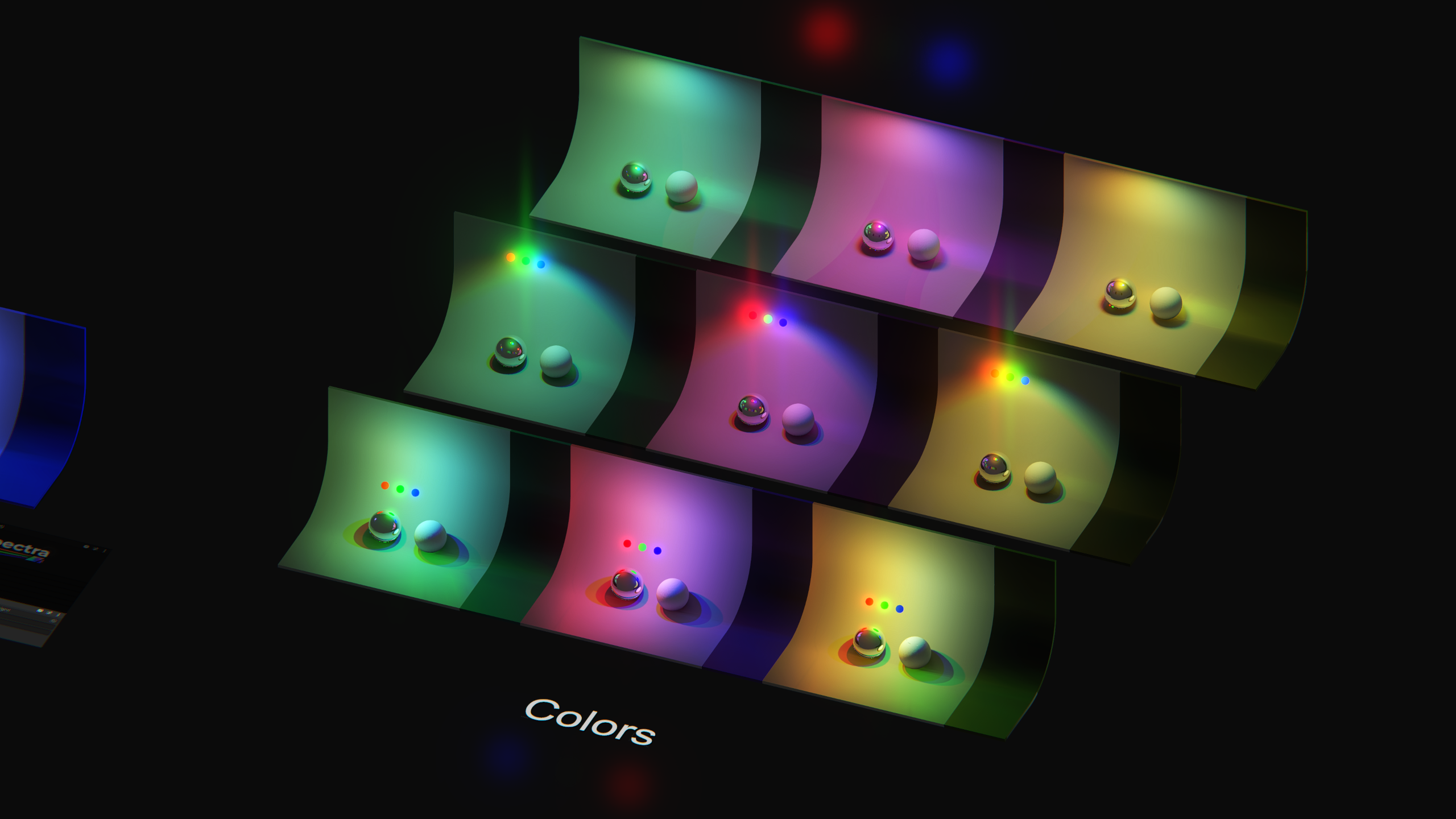
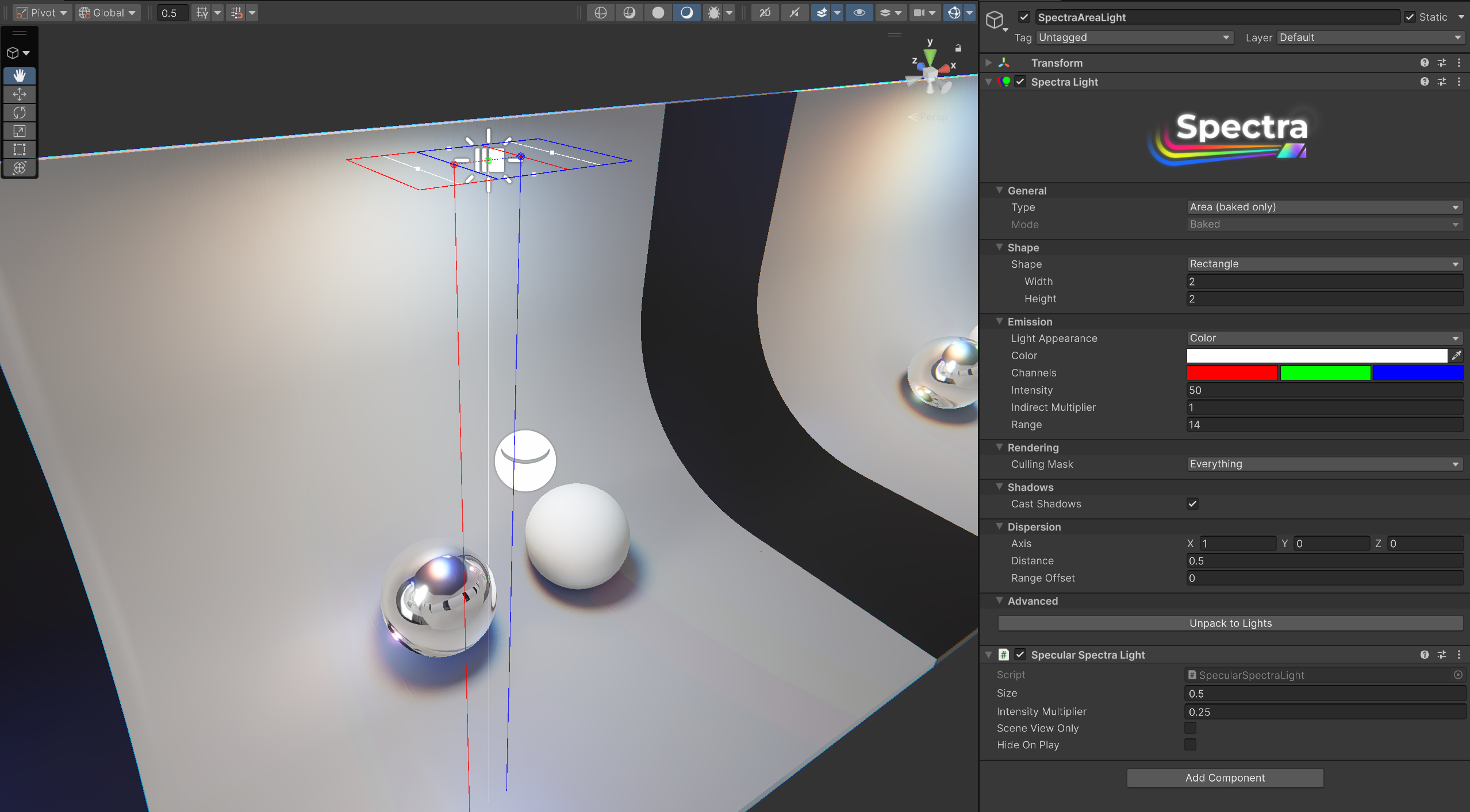
🦄 It just looks different!
Drop a SpectraLight into a scene and the light stops being white. Shadows fall in red, green and blue fringes. Edges catch a prism glint. Highlights stretch into a spectrum across chrome and glass. Room corners, staircases, columns, foliage - everything the light touches picks up a chromatic edge you cannot get from a regular Unity light.
One simple technique, a thousand new ways to light a scene: neon bars and clubs, sci-fi corridors, museums and galleries, dreamlike interiors, horror hallways, cutscene moments that need to feel off.
The effect is fully yours to control. Keep it subtle for a cinematic lens feel, or push it until shadows split into three distinct colors. Choose where the spectrum spreads, how far it reaches, and how it flares. Point, Spot and Area lights all work, so it fits any lighting setup you already have.
💡 Feels like a Unity light
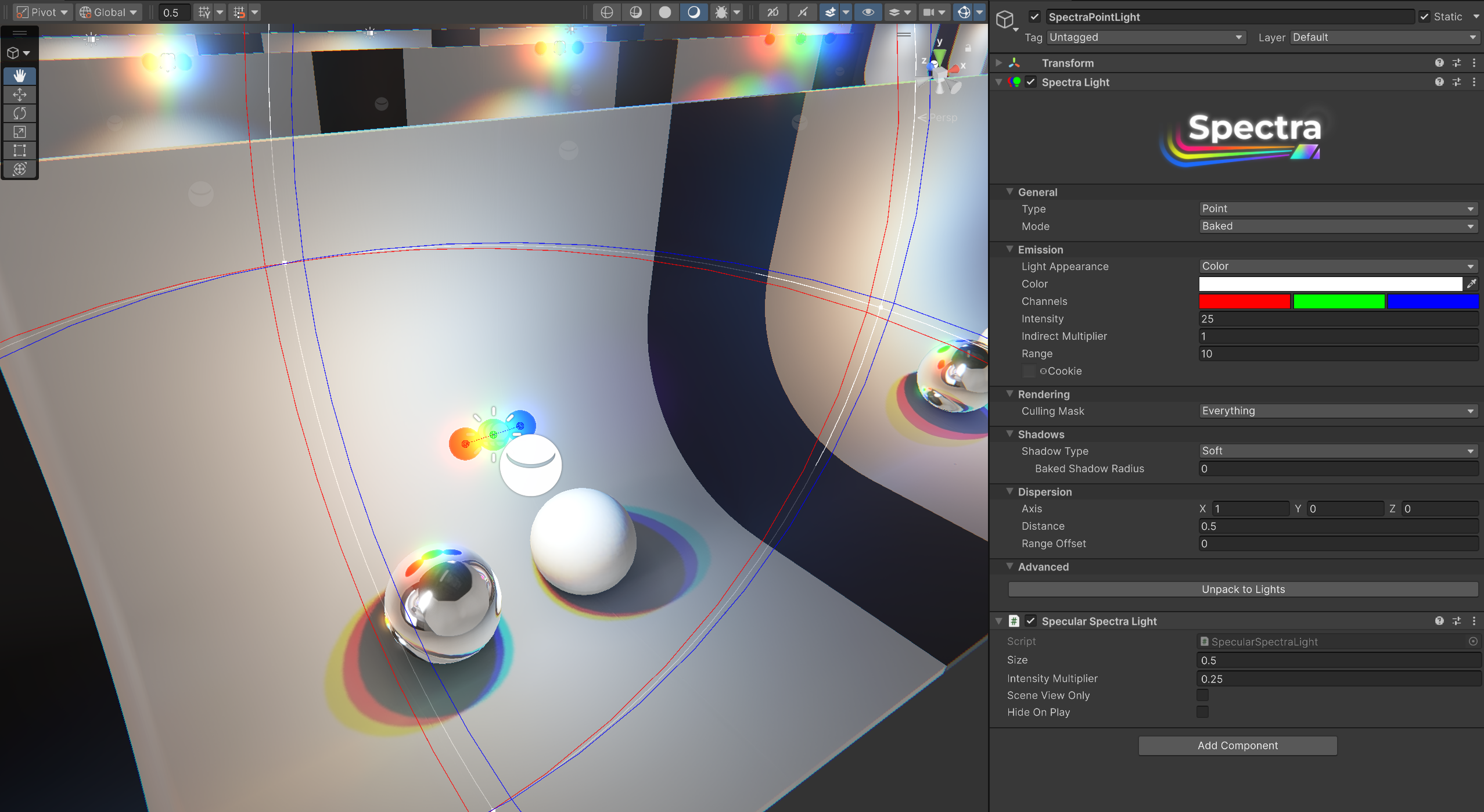
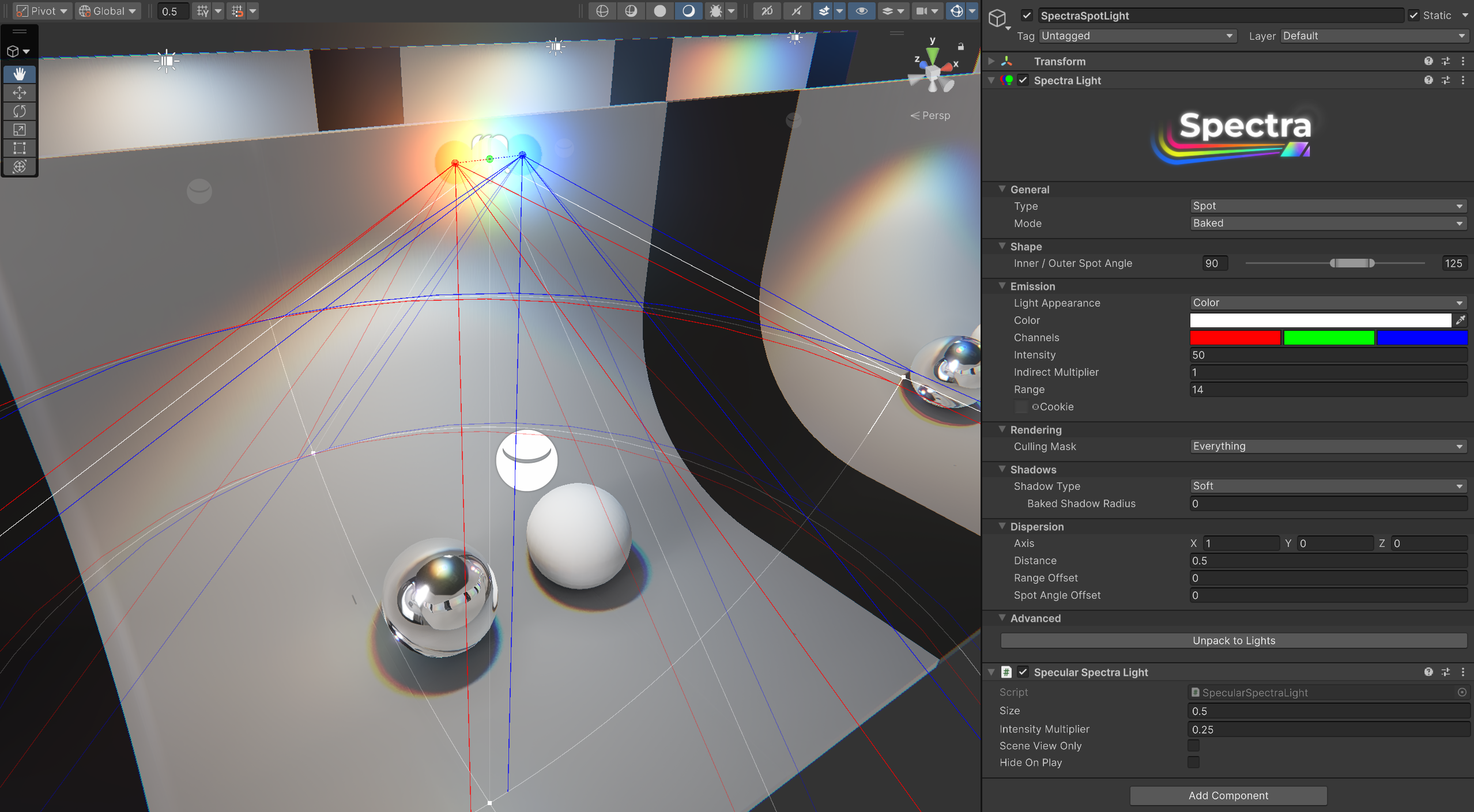
SpectraLight looks and behaves like the Light you know: same inspector, same modes (Realtime, Mixed, Baked), same shadows, cookies, color temperature and rendering layers. Scene gizmos and swatches show the spectrum before you bake. Reflection probes pick up the colored highlights too, so chrome and glass show the effect as well. And if you ever need plain lights back, one click unpacks a SpectraLight into three regular Unity Lights.
🧁 Made for baking
SpectraLight is at its best with Baked and Mixed lighting: once baked into lightmaps, light probes and reflection probes, the colored shadows and dispersion cost nothing at runtime. Realtime mode works as well, but every SpectraLight is three lights, so budget for it. Fine for cinematics and cutscenes; not intended for realtime on mobile.
Why SpectraLight exists?
A light in a game engine has one color. Real optics are messier: push light through a prism, a lens or a drop of water and it splits into a spectrum.
Games borrow that look, but only at the end of the frame. Chromatic aberration is a post-process: it shifts the finished image in red and blue based on screen position, not on where the light is, and it cannot be baked.
SpectraLight puts the split into the light itself. Shadows fall in red, green and blue fringes; push it further and they separate into three colored copies. With baked reflection probes, highlights on chrome and glass split into color too. And because it is part of the lighting, it bakes: once in lightmaps and probes, it costs no more at runtime than any other baked light.
So why isn’t this everywhere?
In game engines, “chromatic” means the post-processing effect. Colored shadows usually come from colored translucent objects, like stained glass, where the color belongs to the object in the way rather than to the light. The other route is hardware ray tracing, which needs specific hardware and a specific pipeline. Lighting tools on the Asset Store mostly make light visible in the air (volumetrics, beams, god rays) or make baking faster.
And the idea is the easy half. The work is making an unusual light behave like an ordinary one: the inspector you already know, gizmos that show where each color goes, correct results in lightmaps and reflection probes, prefabs and duplication that just work, and one click back to plain Unity lights if you want out.